

Competitive gaming is evolving faster than ever, and players who don’t adapt get left behind. Whether you’re grinding ranked matches, optimizing your controller setup, or studying pro-level play, the difference between average and elite often comes down to mastering mechanics, understanding meta shifts, and applying smart risk reward strategy gaming principles in real time.
If you’re here, you’re likely looking for actionable insights—ways to sharpen your mechanics, gain a competitive edge, and make smarter in-game decisions. This article breaks down key gaming mechanics, controller optimization techniques, esports trends, and high-impact strategies that translate directly into better performance.
Our analysis draws from competitive match breakdowns, hands-on controller mod testing, and deep dives into pro gameplay patterns. Instead of surface-level tips, you’ll get practical guidance you can apply immediately—whether you’re climbing the ladder or refining your tournament-ready setup.
The Decisive Edge
Why do two players with identical mechanics post different win rates? It’s not magic thumbs. It’s math (the unsexy kind). Most players trust gut feelings—“I feel lucky”—right before face-checking a bush and donating free gold. However, elite competitors pause and weigh odds, cooldowns, vision, and tempo.
That’s risk reward strategy gaming in action.
Instead of asking, “Can I win this fight?” they ask, “What’s the percentage play?” Sometimes aggression snowballs. Other times, backing off wins championships (and preserves your dignity). So rather than flipping coins with graphics, quantify choices, manage risk, and stack advantages before final showdown.
The Core Calculation: A Mental Model for Every In-Game Choice
Every meaningful decision in a strategy game can be reduced to two forces: risk and reward. But let’s define them properly.
Risk isn’t just “dying” or “losing.” It’s the loss of tempo (who controls the pace), map control (vision, territory, pressure), or economic advantage (gold, resources, scaling).
Reward is the direct inverse: gaining tempo, control, or economic leverage.
The simplest way to evaluate both is through Expected Value (EV):
(Chance of Success % x Value of Reward) - (Chance of Failure % x Cost of Failure)
If the result is positive, the play is likely correct over time. This is the backbone of risk reward strategy gaming at high levels.
RTS Example: The Early Worker Rush
On paper, crippling your opponent’s economy sounds brilliant. But consider:
- Risk: Lose 6 workers, stall your own build, fall permanently behind
- Reward: Damage or delay their economy
Because the success rate is low against competent defense (often under 30% in competitive ladders, per tournament replay analysis), the EV skews negative. It’s flashy—but usually incorrect (yes, even if it worked once in Gold rank).
MOBA Example: The Tower Dive
A dive for one kill seems simple. But variables explode:
- Enemy jungler missing?
- Flash or defensive ult available?
- Shutdown bounty active?
If failure gives 700+ gold swing (Riot Games bounty data), your cost skyrockets. Suddenly, what felt like a 70% success rate drops to 45%.
Most guides stop at “play safe” or “be aggressive.” The edge comes from recalculating odds in real time. That’s the gap: not mechanics—but math under pressure.
Applying the Framework: Early Game Aggression vs. Economic Greed
The first five minutes decide more games than most players admit. Early advantages compound—meaning small leads stack into overwhelming momentum. In risk reward strategy gaming, that opening window is where decisions echo the loudest. Yet here’s the contrarian take: hyper-aggression isn’t always the “high-skill” choice people claim it is. Sometimes, restraint is harder—and smarter.
Scenario 1: The ‘Greedy’ Economic Build
You expand fast, invest in workers, and delay military. The risk is obvious: early pressure can end the game instantly. The reward? A crushing economic lead if untouched. This works best on maps with tight choke points (narrow paths that limit enemy access) or long rush distances. Critics argue greed is reckless. But if scouting shows a passive opponent, it’s calculated—not careless (think Moneyball, but with supply counts).
Scenario 2: The All-In Rush
You commit everything to early offense. If it fails, your economy collapses. If it hits, it’s over. This is only justifiable with strong intel—spotting a fast expansion or skipped defenses. Blind rushing isn’t bold; it’s gambling.
The Balanced Approach
Standard meta builds aim for equilibrium: solid economy, modest defense, scalable options. They’re not flashy, but they reduce volatility—your safest baseline in most matches.
Mid-Game Pivots: Objective Control and Information Warfare
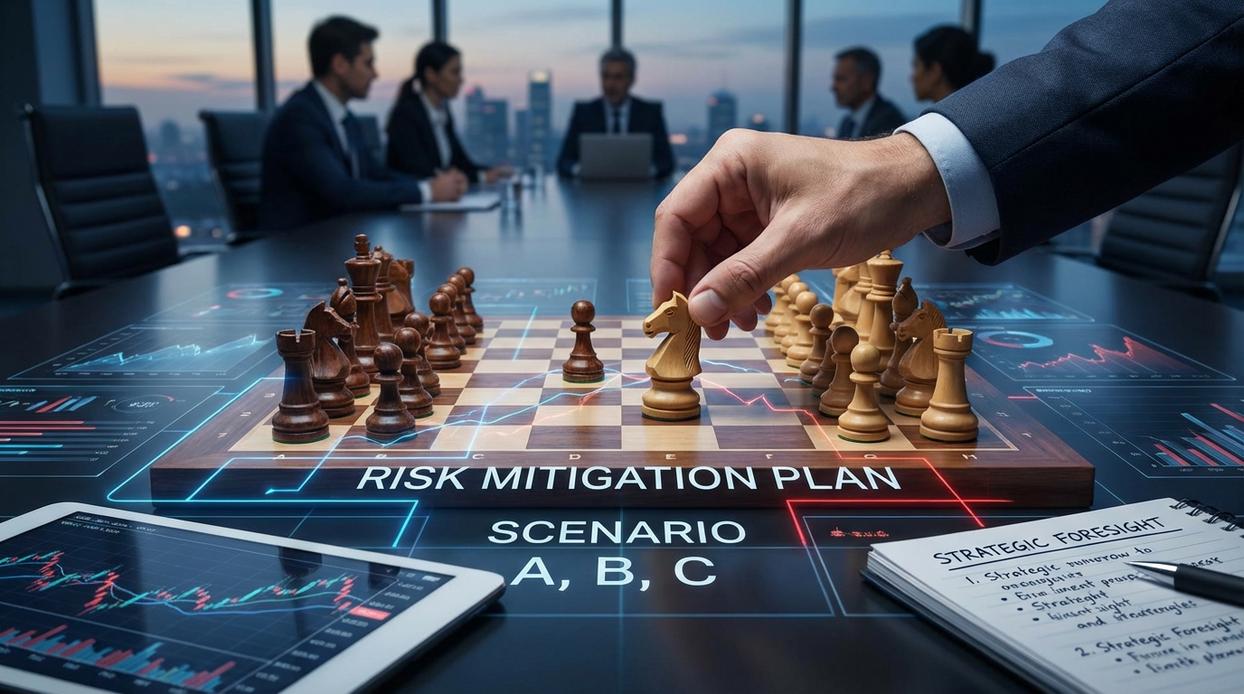
By mid-game, the math changes.
Early skirmishes are recoverable. A missed minion wave or small resource loss barely dents momentum. But now, Value (the potential reward of a play) and Cost (what you lose if it fails) have both scaled dramatically. One bad call can swing gold, map control, and tempo in a single collapse. One clean play can end the game outright.
The Objective Play
Take Baron in League of Legends or a late-stage Wonder in a 4X title. These are major neutral objectives—high-impact map elements that grant massive strategic advantage. The reward? Game-winning pressure. The risk? Getting wiped in the pit while your opponents stroll down mid. (We’ve all seen that throw.)
Some argue these moments are always 50/50 coin flips. But that’s only true if you treat them like coin flips.
Reducing Risk with Information
The single biggest edge competitors overlook is information asymmetry—when you know more than your opponent.
- Deep vision reduces ambush probability.
- Timed scouting tracks enemy cooldowns and rotations.
- Wave management reveals intent before it’s executed.
In practical terms, vision lowers the Chance of Failure variable in your internal equation. What looks like a gamble becomes calculated risk reward strategy gaming. Studies in esports performance analysis show teams with superior vision control secure neutral objectives at significantly higher rates (Riot Games Competitive Data Reports).
Forcing Lose-Lose Scenarios
True mastery isn’t starting Baron blindly. It’s setting conditions where the enemy must:
- Concede the objective for free, or
- Contest at a positional disadvantage.
That’s not luck. That’s engineered pressure.
If you want a deeper breakdown of structured decision models, revisit our guide on beginner to advanced building a winning strategy framework.
Pro tip: Start objectives to pull enemies into bad terrain—not necessarily to finish them.
Mid-game isn’t chaos. It’s controlled leverage.
Mastering the Endgame: When to Break the Rules
When you’re significantly behind, the Hail Mary play stops being reckless and starts being rational. In this state, conservative moves simply delay defeat. Low-probability, high-reward attempts become your only path to victory—the core of risk reward strategy gaming.
Asymmetric stakes define the endgame:
- The leader minimizes exposure and protects advantage.
- The trailer engineers volatility to reset momentum.
But math isn’t everything. Reading your opponent matters. Against a cautious rival, aggression carries safety; against a hyper-aggressive foe, it can backfire. Break rules deliberately, not emotionally, and only when stakes demand it.
Integrating Calculated Risk Into Your Natural Playstyle
At first, calculated play feels slow. You pause, you second-guess, you overthink. However, the goal isn’t to run spreadsheets mid-match (no one wants that). It’s to practice until smart choices become automatic. That’s where risk reward strategy gaming shifts from theory to instinct.
The real benefit? Fewer unforced errors and fewer “what was I thinking?” moments. Instead of gambling on low-percentage plays, you start stacking small, favorable advantages. Over time, that consistency wins games.
So here’s your next step: load your last loss replay. Pause at every major turning point. Analyze the risk/reward. Then identify the smarter alternative.
Master Your Edge and Play Smarter Every Match
You came here to sharpen your understanding of competitive play and how smart decisions separate average players from elite performers. Now you have a clearer view of how mechanics, optimization, and calculated decisions shape outcomes in every match.
The biggest frustration in gaming isn’t losing—it’s knowing you could have played better. Missed opportunities, poor loadout optimization, and weak decision-making in clutch moments all come down to one thing: not fully understanding risk reward strategy gaming and how to apply it under pressure.
The players who consistently win aren’t just faster—they’re smarter. They know when to push, when to hold, and how to tweak their setups for maximum performance. That’s how small advantages turn into dominant results.
If you’re serious about leveling up, don’t stop here. Dive deeper into advanced controller mods, performance optimization hacks, and pro-level breakdowns designed to give you a competitive edge. Join thousands of competitive players already upgrading their strategy and mechanics—start applying these insights in your next session and feel the difference immediately.
 Robert Dupontontie brings a meticulous eye to the technical landscape of Tportstick, specializing in the granular analysis of gaming mechanics. His contributions focus on breaking down complex engine physics and frame-data analytics, providing readers with a deep understanding of how games operate under the hood. By translating high-level data into actionable pro strategies, Robert ensures that the community has the knowledge needed to refine their playstyle and gain a competitive edge in fast-paced environments.