

If you’re searching for a competitive edge in gaming, you’re not alone. Whether you’re climbing ranked ladders, fine-tuning your stick sensitivity, or tracking the latest esports shifts, staying ahead requires more than raw skill—it demands informed strategy. This article is built to give you exactly that.
We break down the latest developments in gaming mechanics, controller optimization, and competitive play, backed by hands-on testing, community insights, and performance trend analysis drawn from real match data and tournament results. Instead of recycled tips, you’ll find practical adjustments, meta-aware strategies, and controller mod insights that can immediately impact your gameplay.
Our focus is simple: help you understand what’s working right now, why it works, and how to apply it. From stick-based controller tweaks to pro-level decision-making patterns, this guide aligns directly with what competitive players are actively searching for—clear, actionable insights that translate into better in-game performance.
Breaking through a skill ceiling feels brutal. You grind for hours, queue again, and your rank barely moves. I’ve been there, staring at the screen wondering if more reps were secretly pointless. The truth? Gut instinct alone is unreliable. It hides patterns, masks bad habits, and turns slumps into mysteries. Your data is the cheat code (yes, like unlocking a hidden level). When you run performance trend analysis, you see objective proof: weak aim angles, late rotations, tilted decision-making. Pros obsess over this, and so should you. In this guide, I’ll show a step-by-step framework to audit your history ruthlessly.
Raw talent feels magical in the moment, but it’s rarely the full story. Some players swear they’re just “naturals” while others grind endlessly. The truth probably sits somewhere in between. Skill is potential; practiced, analytical improvement is what turns that potential into repeatable results. Your gameplay history is the bridge.
For example, you might remember a clutch win, yet overlook that you consistently rotate late or overspend early. Those are invisible mistakes subtle, repeated errors hidden by adrenaline. I’m not claiming every stat tells the whole story; context matters. Still, reviewing match data can expose patterns your memory edits out (our brains are unreliable highlight reels).
This is where performance trend analysis becomes powerful. A five-game win streak could be luck, matchmaking, or one hot night. Long-term metrics, however, reveal whether your accuracy or economy management is actually improving. I can’t promise perfect clarity even data has limits and blind spots.
Yet numbers offer objective feedback. They don’t tilt, sugarcoat, or hold grudges. When a teammate says you’re “throwing” that might be emotion. When your stats show declining map efficiency, that’s evidence. Pro tip: track one metric weekly and adjust deliberately. Over time trends speak louder than vibes. Trust arc.
The Core Metrics: What to Track for Meaningful Insights
By analyzing in-game performance trends through data-driven metrics, players can not only enhance their gameplay but also deepen their understanding of the essential strategies outlined in our previous article, “Mastering Core Gaming Mechanics: A Complete Strategy Guide.
Let’s simplify the numbers that actually matter.
First, universal combat metrics like K/D/A (Kills/Deaths/Assists) and Accuracy %. These stats show mechanical consistency over time. But here’s the clarification most players miss: a declining K/D doesn’t automatically mean your aim is worse. It could signal poor positioning, slower rotations, or riskier engagements. When you review dozens of matches instead of one bad night, patterns emerge. That’s where performance trend analysis becomes powerful—it reveals direction, not just isolated outcomes.
Next, focus on game-specific objective metrics such as Damage to Objectives, CS (Creep Score) per Minute, or Spike Plants. These track contributions tied directly to winning conditions. After all, flashy eliminations mean little if the objective is ignored (yes, we’ve all chased kills and lost the round). If your CS per Minute rises steadily, that’s measurable progress in resource control and map awareness.
Speaking of resources, economic management metrics like gold or credits per round are critical. More income over time equals stronger loadouts and strategic flexibility. If you’re consistently out-earning your past self, you’re expanding your options—and options win games.
Finally, analyze positional and map data. Heatmaps and recurring death locations highlight overextensions or predictable routes. If you repeatedly fall in the same corridor, that’s actionable intelligence.
For deeper breakdowns on optimizing these metrics, explore strategic guides at Tportstick.
Your Analyst Toolkit: Gathering and Reviewing Performance Data
I used to think improvement meant grinding more matches. I’d re-watch a loss, shrug, and queue again. Big mistake. Without a system, replay review turns into passive watching (basically Netflix with extra frustration).
Leveraging In-Game Replay Systems
Don’t just re-watch—hunt patterns. Decide what you’re tracking before you load the replay: positioning errors, wasted cooldowns, failed rotations. For example, if you’re testing concepts from why map control dictates the flow of modern team based games, pause every time an objective spawns and check your positioning. I learned the hard way that “I felt out of position” isn’t data.
Using Third-Party Stat-Tracking Sites
Platforms like Tracker.gg, OP.GG, and Dotabuff aggregate hundreds of matches. This is where performance trend analysis shines. Over time, you’ll spot patterns—like a 12% lower win rate on aggressive openers. I once blamed teammates for losses; the stats showed my early deaths were the common denominator.
The Simple Power of a Spreadsheet
Create one column: “Executed new strategy? Y/N.” Track 20 games. Simple. Brutal. Honest.
VOD Review vs. Stats
Stats tell you what went wrong. VODs reveal why. Find the worst match statistically—then dissect it frame by frame.
From Data to Dominance: How to Spot Patterns and Adapt
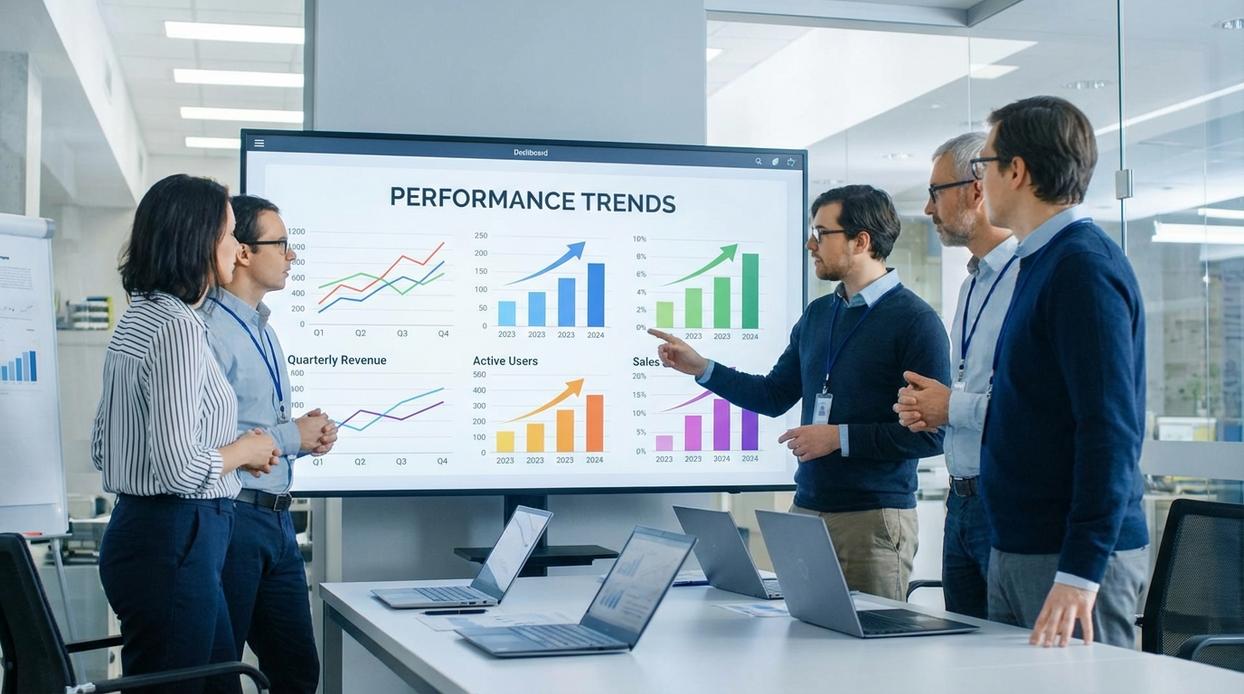
If you’re not tracking your matches, you’re guessing. And guessing is NOT a strategy.
Identifying Performance Dips
Start with performance trend analysis. Review 20–30 recent games and look for clusters of losses. Are defeats stacking on one map? One character? A late-night queue window? For example, if your win rate drops from 58% overall to 42% on a specific map, that’s not bad luck—that’s a pattern.
| Scenario | Win Rate | Notes |
|---|---|---|
| Map A | 58% |
Strong objective control |
| Map B | 42% | Struggle with rotations |
Some argue “just play more” and skill evens out. I disagree. Data beats vibes (every time).
Validating New Strategies
Think A/B testing: compare two controlled versions. Baseline 20 games. New controller mod or strategy for 20 more. If objective captures or K/D improves meaningfully, keep it.
Pinpointing Your Win Conditions
Study your BEST wins. Do you snowball after first objective? Then prioritize early aggression. Define your win condition—and repeat it relentlessly.
Building Your System for Consistent Improvement
First, remember the core idea: stop playing on autopilot and start playing with analytical purpose. Your match history isn’t random noise; it’s raw data waiting to coach you. If you feel stuck, that’s not a talent issue—it’s an information gap.
So here’s the fix. Pick one metric—accuracy rate, win percentage on a specific map, or average reaction time. Next, log it in a spreadsheet or tracking app after each session. After 10–20 games, run a performance trend analysis. Did it rise, dip, or plateau? Adjust one habit and repeat.
Small data. Smart tweaks. Progress.
Level Up Your Competitive Edge
You came here to sharpen your understanding of advanced gaming mechanics, controller optimization, and the competitive trends shaping today’s esports scene. Now you have the insights to fine-tune your setup, adapt faster, and make smarter in-game decisions.
The reality is this: falling behind on mechanics, missing optimization tweaks, or ignoring key data trends can cost you wins. In competitive play, small inefficiencies turn into big losses. That’s why staying updated with performance trend analysis and evolving pro strategies isn’t optional—it’s essential.
Your next move? Put these insights into action. Optimize your controller settings, apply the mechanical adjustments, and track your improvement session by session. Don’t just play—analyze, refine, and dominate.
If you’re serious about climbing ranks and outperforming the competition, tap into proven optimization hacks and expert-backed breakdowns trusted by competitive players. Start implementing these strategies today and turn every match into measurable progress.
 Pamelara Gillmanimo serves as a key voice in the platform's esports coverage, delivering comprehensive reports on global tournaments and emerging talent. Beyond the leaderboard, she explores the intersection of hardware and skill, frequently detailing optimization hacks and the latest trends in stick-based controller mods. Her work is essential for players looking to keep their setups at peak performance while staying informed on the shifting dynamics of the professional gaming scene.